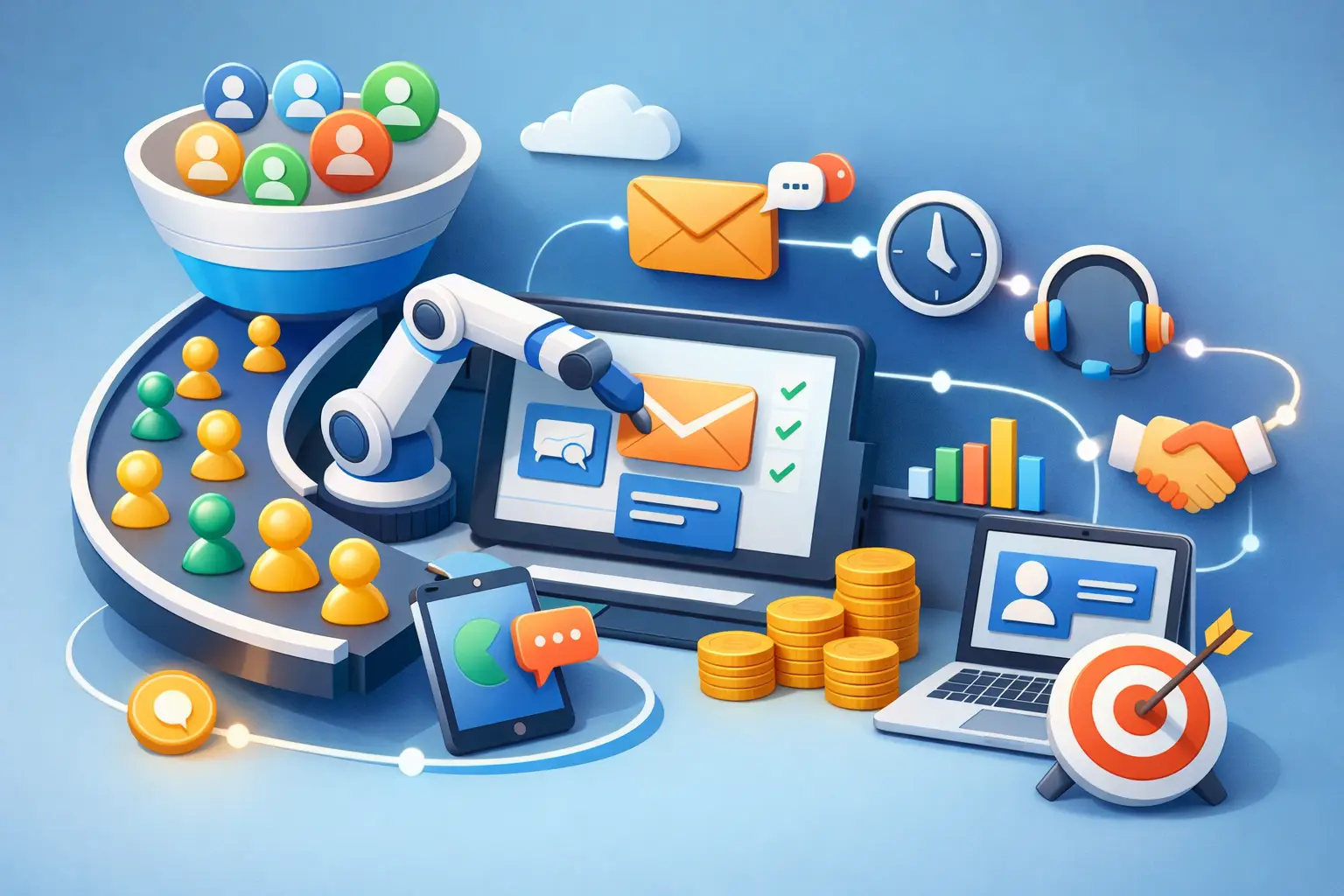
How to Automate Lead Followup That Converts
Learn how to automate lead followup with the right timing, messaging, and CRM workflows so more leads turn into booked calls and sales.
A lead fills out your form at 9:12 a.m. By 2:40 p.m., your team finally replies. That gap is where deals disappear.
If you want to know how to automate lead followup, start with a hard truth: speed wins, but random automation does not. The goal is not to send more messages. The goal is to respond faster, qualify smarter, and move serious buyers toward action without your team chasing every inquiry manually.
For small and mid-sized businesses, this is one of the fastest ways to improve lead conversion without increasing ad spend. You already paid to generate the lead. Automating the follow-up process helps you protect that investment.
Why manual follow-up breaks down
Most businesses do not lose leads because their service is weak. They lose them because their process is inconsistent. One lead gets a quick response, another waits a day, and a third falls through the cracks completely. When inboxes, spreadsheets, and sticky-note reminders run the pipeline, follow-up becomes dependent on whoever happens to be available.
That creates three expensive problems. First, response time slows down. Second, messaging becomes inconsistent. Third, there is no clean way to track what is working. You cannot scale growth if every new lead depends on manual effort and memory.
Automation fixes the operational side of lead management. It gives every inquiry an immediate next step, keeps communication moving, and creates visibility into conversion data. That does not replace human sales. It makes human sales more effective.
How to automate lead followup without sounding automated
This is where many companies get it wrong. They set up a generic email sequence, blast every lead the same way, and wonder why engagement drops. Good automation is not about volume. It is about relevance and timing.
A strong follow-up system starts by separating leads based on source, intent, and urgency. Someone requesting a quote should not get the same message flow as someone downloading a guide. A lead from a branded search campaign is usually warmer than a cold social click. A form submission that mentions timeline and budget deserves a different response than a general contact request.
The more your system understands context, the better your automation performs. That is the difference between a follow-up engine and an email drip that gets ignored.
Start with the trigger points
Every automation begins with an action. In most cases, that trigger is a form submission, booked call, chat inquiry, ad lead form, or inbound text. Once that event happens, the system should fire instantly.
The first response should confirm the inquiry and set expectations. This is not the place for a long sales pitch. It should reassure the lead that their message was received, explain what happens next, and if possible, offer a direct path to book a call or reply with details.
For higher-intent leads, speed matters even more. An immediate text message or email can dramatically improve contact rates. If your business sells high-ticket services, adding automated lead routing to the right salesperson or department is often just as important as the first message itself.
Build sequences around buying intent
Not every lead is ready now. That is why one-message follow-up systems leave money on the table.
A better approach is to create short sequences based on where the lead is in the decision process. Hot leads should get immediate outreach, fast reminders, and a clear appointment path. Warm leads may need proof, case-driven messaging, or answers to common objections. Cold or early-stage leads need light nurture, not aggressive sales pressure.
This is where automation becomes a strategic asset. It gives your team a way to stay present without manually checking in every day. Done right, it keeps your brand visible while the prospect gets ready to move.
The core workflow every business should have
If you are figuring out how to automate lead followup for the first time, do not overbuild it. Start with one reliable workflow that covers the essentials.
A strong baseline system usually looks like this: a lead comes in, the CRM captures the source and details, an instant confirmation message is sent, the lead is assigned to the right pipeline, and a short follow-up sequence begins if there is no reply. If the lead books a meeting, reminders go out automatically. If the lead goes quiet, the system triggers re-engagement later.
That single workflow can remove a surprising amount of friction. It cuts response delays, keeps outreach consistent, and gives your team a cleaner handoff from marketing to sales.
What matters most is that your CRM, forms, ad platforms, calendar, and communication channels actually talk to each other. If data is fragmented, automation becomes fragile fast. This is one reason businesses often hit a ceiling with patchwork tools. The workflow exists, but the system behind it is not reliable enough to support growth.
Use the right channels for the right message
Email works well for detail. Text works well for urgency. Phone calls still matter for high-value leads. The best automated systems do not rely on a single channel.
For example, a new service inquiry might get an instant email confirmation and a text within a few minutes inviting them to book. If there is no response, the assigned rep gets a task to call. If the lead still does not engage, the nurture sequence continues by email over the next several days.
The trade-off is simple: more channels can improve conversion, but too much outreach can feel aggressive. Frequency has to match buying intent. If someone requested a proposal, they expect fast contact. If they downloaded a resource, you need a lighter touch.
Personalization matters more than people think
Using a first name is not personalization. Referencing the actual service requested, location, ad source, or need is far more effective.
Modern automation tools can pull form fields, campaign data, and behavior into follow-up messages. That allows you to tailor the first contact in a way that feels relevant instead of generic. Even small improvements here can lift response rates because the message feels specific to the lead's problem.
This is also where AI can help. It can support lead scoring, message variation, routing logic, and even draft responses based on inquiry type. But AI should support your process, not run wild without oversight. If the outputs are vague or off-brand, conversion suffers.
What to measure after you automate
The system is only as good as the results it produces. Once automation is live, track the numbers that actually affect revenue.
Response time is the first one. Then look at contact rate, booked appointments, no-show rate, qualified opportunity rate, and close rate by lead source. If you only track open rates and clicks, you are missing the real picture.
You should also compare automated follow-up performance across channels. Some businesses see better results from text-first sequences. Others do better when email carries the process. It depends on your audience, price point, and sales cycle.
Watch for bottlenecks. If leads reply but do not book, your call to action may be weak. If bookings happen but no-shows are high, your reminder sequence needs work. If low-quality leads clog the pipeline, your forms or routing rules probably need refinement.
Common mistakes that hurt conversion
The biggest mistake is automating a broken sales process. If your offer is unclear, your form is weak, or your team handles calls poorly, automation will not save the funnel. It will simply make the problem happen faster.
Another mistake is overcomplicating the setup. Businesses often build too many branches, too many tags, and too many message variations before they have enough data to justify it. Start lean. Prove what works. Then expand.
Generic copy is another common issue. If every message sounds like software wrote it, leads tune out. Strong automated follow-up still sounds like a real business talking to a real buyer.
And finally, do not treat setup as the finish line. Automation needs maintenance. Offers change, campaigns change, buyer behavior changes. The businesses that win with automation review and improve their workflows consistently.
When automation becomes a growth advantage
At a certain point, lead follow-up is no longer just an admin task. It becomes a competitive edge. If your business can respond in seconds, route leads intelligently, personalize outreach, and keep the pipeline moving without manual chaos, you will outperform slower competitors even with the same traffic volume.
That is why this matters. Better follow-up does not just improve efficiency. It helps you get more revenue from the leads you already have.
For companies that want to scale without adding operational drag, the real opportunity is not just learning how to automate lead followup. It is building a system that turns attention into action, consistently, while your team stays focused on closing business.
The best automation should feel invisible to your prospect and undeniable in your numbers.