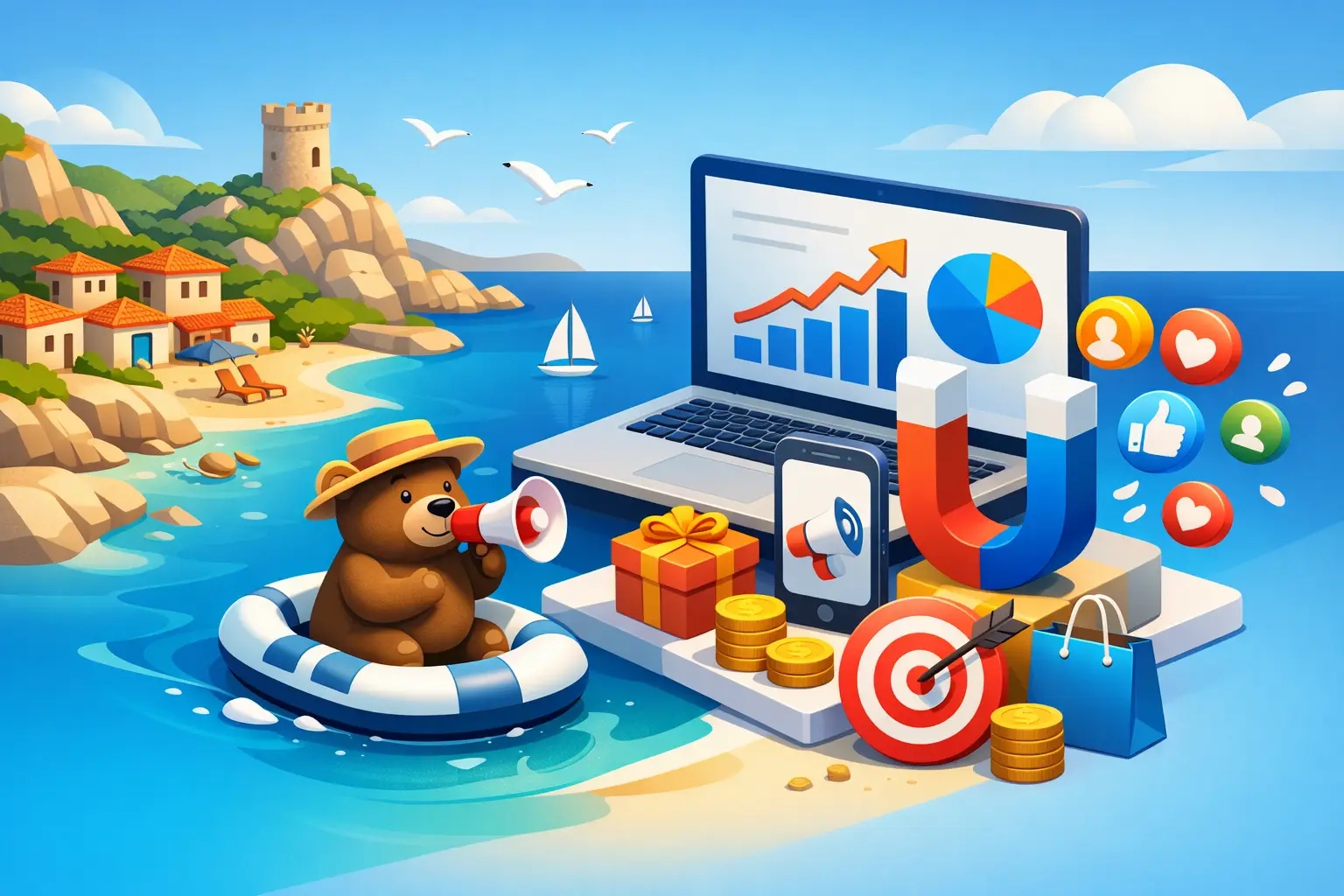
Marketing in Sardinia That Wins Customers
Marketing in Sardinia works best when strategy, local insight, websites, ads, and automation align to turn visibility into steady growth.
A business can have a great product, a strong reputation, and a solid team - and still lose market share if its digital presence is weak. That is the reality of marketing in Sardinia. Visibility is fragmented, buyer behavior shifts fast, and too many companies still treat their website, ads, and brand message as separate projects instead of one growth system.
That mistake is expensive. Whether you are selling to tourists, local residents, real estate buyers, hospitality guests, or B2B clients, the same rule applies: people compare online before they commit. If your site feels outdated, your search presence is inconsistent, or your ads send traffic into a poor user experience, competitors win the click and usually the sale.
What makes marketing in Sardinia different
Sardinia is not a copy-and-paste market. The audience is mixed, seasonal patterns matter, and demand often comes from multiple directions at once. Some businesses need to attract local customers year-round. Others rely on surges tied to travel, events, or second-home activity. Many need both.
That creates a strategic challenge. A company cannot rely on one channel and expect stable growth. Organic search may build long-term visibility, but it takes time. Paid ads can accelerate demand, but weak targeting burns budget fast. Social media can build attention, but attention alone does not create revenue. The winners connect all of it.
Marketing here works best when it is built around buyer intent. What are people searching for? What do they need to see before they trust you? What friction is stopping them from contacting you, booking, or buying? Those questions matter more than posting frequency or vanity metrics.
The biggest mistake businesses make
The most common problem is fragmentation. One vendor builds the website. Another runs ads. Someone internal posts on social. Nobody owns the full customer journey. The result is predictable: mismatched messaging, poor tracking, wasted spend, and no clear path from traffic to revenue.
A modern growth strategy needs tighter coordination. Your website should support conversion, not just look respectable. Your ad campaigns should feed qualified traffic into pages designed to move people forward. Your CRM, automation, and reporting should show what is actually working. If those pieces are disconnected, performance stays unpredictable.
This is where many businesses plateau. They do enough marketing to stay active, but not enough to dominate. Being visible is not the same as being chosen.
A strong website is not optional
For many companies, the website is still the highest-leverage asset in the stack. It shapes first impressions, supports search rankings, and determines whether paid traffic converts or disappears. Yet too many businesses treat web design as a one-time branding exercise.
That is a problem because a website is a sales tool. It should load fast, work flawlessly on mobile, communicate value in seconds, and guide the visitor toward action. If it is slow, confusing, or generic, marketing spend becomes less efficient across the board.
In competitive markets, performance matters at the technical level too. Clean development, modern frameworks, strong page architecture, and thoughtful UX all influence results. A better-looking site is nice. A better-performing site is what drives growth.
Why technology matters more than most teams realize
A lot of marketing conversations stay surface-level. More posts. Better ads. Fresh branding. Those can help, but the underlying technology often has a bigger impact than expected.
If your forms break, tracking is inaccurate, landing pages are hard to update, or your site architecture limits SEO growth, the business pays for it. The same goes for poor integrations between your website, lead routing, and follow-up systems. Leads are generated, then mishandled.
Businesses that want better returns need more than campaigns. They need infrastructure. That means web development that supports scale, analytics that expose bottlenecks, and automation that keeps prospects moving without manual chaos.
Search, paid ads, and local credibility must work together
The best results usually come from channel alignment, not channel obsession. Search engine optimization helps capture intent over time. Paid media gives speed and targeting. Reputation signals such as reviews, trust elements, and clear brand positioning reduce hesitation.
When these pieces work together, momentum builds. A prospect sees an ad, visits a strong landing page, checks your credibility, returns later through search, and finally reaches out. That is a real buying journey. It is rarely one click and done.
This matters for marketing in Sardinia because audience behavior is rarely linear. Some people are planning ahead. Some are comparing options quickly. Some are price-sensitive. Others want premium positioning and proof. A good strategy accounts for different decision speeds and different levels of intent.
Not every business should market the same way
A hospitality brand, a home services company, and a B2B firm should not share the same playbook. That sounds obvious, yet many agencies force every client into the same package.
A local service business may need location-focused SEO, conversion-first landing pages, and call-driven ads. A premium tourism brand may need stronger creative, retargeting, and a booking experience that reduces abandonment. A B2B company may need lead magnets, authority content, and CRM automation that supports longer sales cycles.
The point is simple: strategy should match the economics of the business. If your average customer value is high, investing in stronger systems and data makes sense. If margins are tight, every campaign has to be disciplined and measured closely.
Data should drive decisions, not decorate reports
Most businesses do not need more dashboards. They need clearer answers. Which channel generates qualified leads? Which landing page converts best? Where do prospects drop off? Which campaigns create revenue instead of just traffic?
That is where data science and practical analytics become valuable. Not as buzzwords, but as decision tools. Better tracking reveals what deserves more budget and what should be cut. It also exposes issues teams often miss, like mobile friction, poor lead quality from specific keywords, or hidden delays in follow-up.
Once that visibility exists, optimization becomes more aggressive and more profitable. You stop guessing. You start compounding.
Automation can turn inconsistent marketing into a real system
A lot of businesses lose opportunities after the lead comes in. Response times are slow. Follow-up is manual. Sales teams are uneven. Marketing gets blamed for lead quality when the real problem is process.
Automation helps fix that. The right setup can route inquiries instantly, trigger follow-up sequences, segment leads by intent, and support sales teams with better timing. That creates a tighter revenue engine and improves return on ad spend without increasing traffic.
It also reduces operational drag. Owners and managers should not be stuck patching together forms, spreadsheets, and reminders just to keep leads from slipping away. Growth needs structure.
What good marketing in Sardinia actually looks like
It looks focused. The brand message is clear. The website is fast and conversion-ready. Search visibility improves around the right terms. Paid campaigns are built around intent, not random reach. Reporting connects activity to leads and revenue. Automation supports speed and consistency.
It also looks selective. Not every platform deserves equal attention. Not every trend deserves budget. Smart companies choose the channels that fit their market, sales model, and growth targets, then build depth instead of spreading resources too thin.
There is also a trade-off worth acknowledging. Fast results usually require paid media and strong conversion infrastructure. Long-term efficiency usually comes from SEO, brand authority, and better retention. Most businesses need both. The mix depends on timeline, budget, and market pressure.
The real goal is market position
Good marketing does more than generate clicks. It changes how a business is perceived. It makes the company easier to find, easier to trust, and easier to choose. That is how stronger market position is built.
For companies operating in competitive environments, that shift matters. If your digital presence feels more credible, more modern, and more consistent than the alternatives, your pricing power improves. Your lead quality improves. Your close rate often improves too.
That is why the strongest marketing strategies combine creative, media, development, and technology instead of treating them as isolated services. Growth is easier when one system supports the next.
If your business is serious about stronger performance, this is the moment to look beyond basic promotion and build a marketing engine that can compete. BearSolutions helps companies do exactly that by connecting website performance, digital strategy, advertising, and technology into one growth-focused system. If that is the kind of support you need, request a call and start building a setup that is designed to win.
The businesses that gain ground are rarely the ones doing the most marketing. They are the ones doing the right marketing with the right infrastructure behind it.