Digital Advertising That Drives Better Leads
Digital advertising can drive leads when strategy, creative, landing pages, and measurement work together. See what moves results for long-term growth.
A paid campaign can generate hundreds of clicks and still produce zero meaningful opportunities. That is the hard truth many business owners learn after putting money behind digital advertising without a clear system for turning attention into action.
The issue is rarely the ad platform alone. Weak offers, generic messaging, slow landing pages, unclear conversion paths, and incomplete tracking can all drain a budget before a campaign has a real chance to perform. Effective advertising is not about buying visibility for its own sake. It is about creating a measurable path from the first impression to a qualified lead, booked call, sale, or repeat customer.
For small and mid-sized businesses, that difference matters. Every dollar needs a job. The right approach can help you compete with larger brands, capture demand when customers are actively searching, and build a more consistent lead pipeline.
Digital Advertising Is a Connected Growth System
Digital advertising includes paid search, social media ads, display campaigns, video placements, retargeting, and other formats that put your business in front of specific audiences online. Each channel serves a different purpose. Search ads can capture high-intent prospects looking for a service now. Social ads can create demand, introduce your brand, and reach buyers before they start searching. Retargeting helps bring back visitors who left without converting.
The mistake is treating these channels as isolated tactics. A campaign may receive strong engagement, but if the website gives visitors no clear reason to take the next step, the engagement does not become revenue. Likewise, an exceptional website cannot create opportunities if the right people never find it.
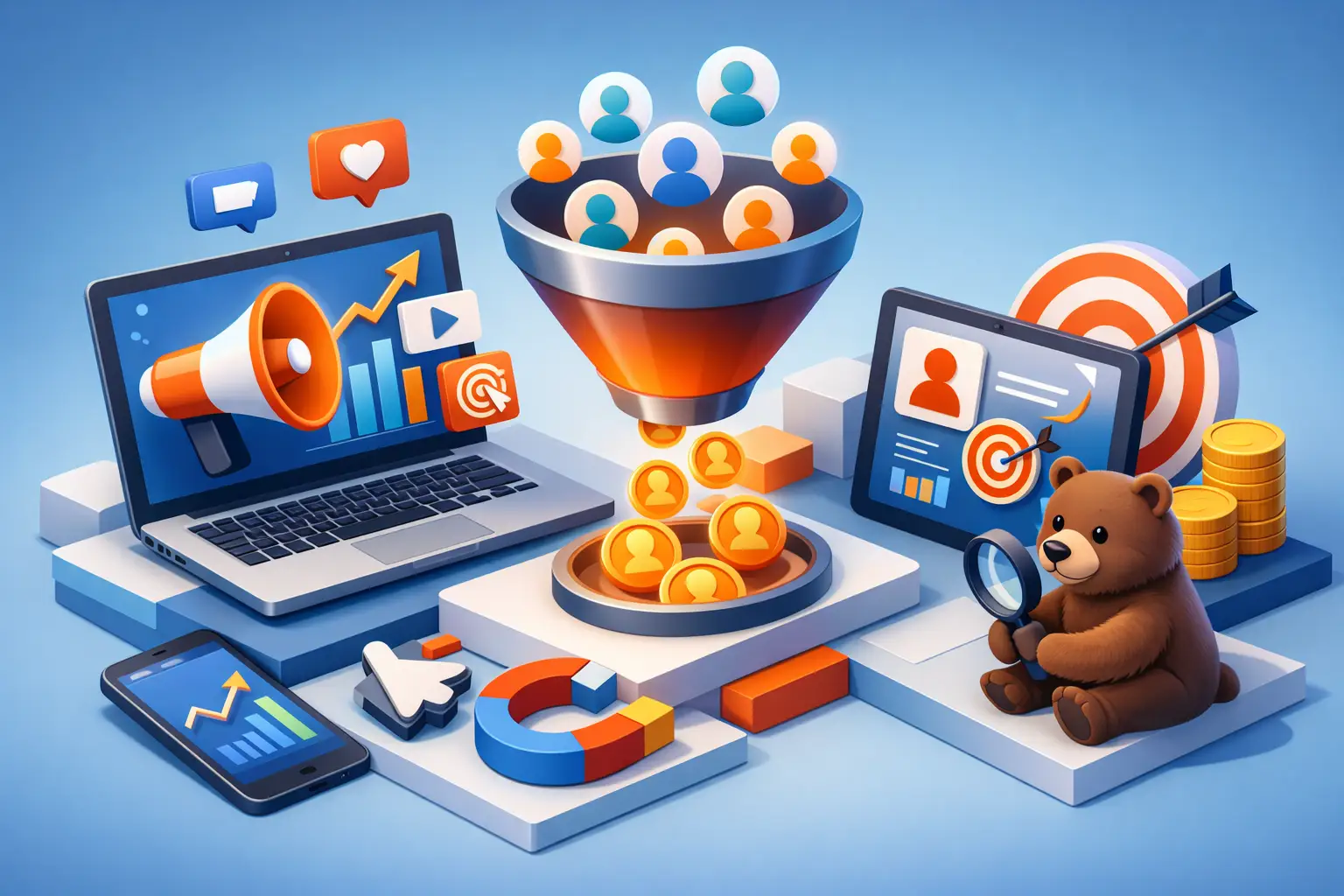
A high-performing program connects four parts: audience strategy, compelling creative, a conversion-ready destination, and reliable measurement. When one area is weak, the others have to work harder. When they work together, advertising becomes a growth engine rather than a monthly expense with vague results.
Start With the Business Outcome, Not the Platform
Choosing a platform before defining the goal is one of the fastest ways to waste spend. A local service company trying to book estimates has different needs than a B2B firm seeking sales conversations or an ecommerce brand focused on online transactions.
Start by deciding what a successful conversion means. It may be a phone call, form submission, demo request, purchase, appointment, or qualified chat. Then identify the value of that action. If a new customer is worth $5,000 over time, paying $150 for a qualified lead may make sense. If most inquiries are low-quality and never become customers, the campaign needs a sharper targeting and qualification strategy.
This is why cost per click is not the final score. Cheap clicks can be expensive when they do not convert. A higher-cost click from a prospect who is ready to buy can be far more profitable.
Build Campaigns Around Buyer Intent
Intent should shape both where you advertise and what you say. Search campaigns are particularly effective when a prospect already knows their problem and is looking for an answer. Someone searching for a commercial web development partner, emergency repair service, or accounting firm is signaling a need. Your message should meet that need directly.
Social platforms work differently. Users are not always looking for your service in that moment, so the ad must earn attention. Strong social creative leads with a pain point, a clear outcome, or a credible reason to reconsider the status quo. It does not bury the offer under vague brand language.
For B2B companies, this may mean showing how an outdated website slows sales, how disconnected systems create operational waste, or how better lead tracking improves follow-up. For consumer brands, it may mean demonstrating the product, highlighting a limited offer, or using real customer proof to reduce hesitation.
The channel matters, but the fit between the message and the buyer's moment matters more.
Targeting Should Be Specific Without Becoming Too Narrow
Precise targeting sounds like an obvious advantage, but over-targeting can limit campaign delivery and prevent useful learning. A narrow audience built from too many job titles, interests, and exclusions may not have enough scale to produce consistent results.
Start with the strongest signals available: geography, relevant service areas, first-party website data, customer lists when appropriate, and broad audience themes connected to your offer. Then let performance data show where quality is coming from.
For local businesses, geography often matters more than elaborate interest targeting. For B2B services, job role, company type, and pain-point-driven messaging may carry more weight. The right balance depends on your market, sales cycle, budget, and the amount of conversion data available.
Your Landing Page Decides Whether Clicks Count
An ad makes a promise. The landing page has to prove it quickly.
Sending paid traffic to a general homepage is sometimes appropriate, especially when a business has a simple offer and a highly focused site. More often, it forces visitors to search for information they expected to find immediately. That extra friction costs conversions.
A campaign landing page should match the ad's message, explain the offer in plain language, show why your business is credible, and make the next action obvious. It should load quickly on mobile, because many prospects will see your ads there first. It should also limit distractions. If the campaign goal is a consultation request, do not give visitors ten unrelated paths to wander away from it.
Technology has a direct role here. Modern web development can improve site speed, reduce form friction, connect leads to a CRM, and ensure tracking remains accurate across devices and platforms. These details are not just technical preferences. They affect how much value you get from every paid click.
Measure Lead Quality, Not Just Lead Volume
A dashboard full of impressions, clicks, and form fills can look encouraging while sales teams are frustrated with the quality of inquiries. The answer is not always to generate more leads. It is to create a feedback loop between marketing and sales.
Track the full journey where possible: ad click, landing-page conversion, contact attempt, qualified opportunity, closed sale, and customer value. This reveals which campaigns drive actual business rather than surface-level activity.
Attribution will never be perfect. A buyer may see a social ad, search your business two weeks later, read reviews, and finally submit a form from a direct visit. That does not make the earlier touchpoints irrelevant. It means performance should be assessed with context, using platform data alongside CRM outcomes, call tracking, and sales feedback.
The most useful reporting answers practical questions: Which services generate the best leads? Which locations respond? Which messages create qualified conversations? Where is spend increasing without producing pipeline? These answers give you the confidence to scale what works and stop funding what does not.
Improve Digital Advertising Through Structured Testing
Campaigns should not be set up once and left alone. Markets shift, competitors change offers, buyers grow tired of repeated creative, and platforms evolve. Ongoing optimization is where much of the return is won.
Test one meaningful variable at a time when possible. Compare two angles in your ad messaging, different calls to action, alternative landing-page headlines, or separate audience segments. Give tests enough time and budget to produce useful evidence. Constantly changing everything at once makes it hard to know what improved performance.
Creative fatigue deserves particular attention. An ad that performed well last month may lose impact after the same audience sees it repeatedly. Refreshing visuals and copy does not mean abandoning the strategy. It means keeping the message relevant while preserving what has proven effective.
Budget decisions should also follow business goals. If a campaign produces profitable, qualified leads and your team can handle more demand, increasing investment may be logical. If fulfillment capacity is limited, the smarter move may be to improve lead quality, raise thresholds, or focus spend on the most profitable services.
When an Integrated Partner Makes the Difference
Advertising performs best when the people managing it can also improve the website, refine the offer, connect the data, and understand the sales objective. Splitting these responsibilities across multiple vendors often creates delays and finger-pointing. The ad team blames the website. The web team blames traffic quality. The business owner is left paying for the gap.
BearSolutions Marketing & Technology brings these pieces together: advertising strategy, conversion-focused web experiences, automation, and performance data built around growth. That integrated approach helps businesses move faster, identify bottlenecks, and create a digital presence that supports every dollar invested in acquisition.
If your paid campaigns are producing activity but not enough revenue, do not settle for more clicks. Request a call with BearSolutions to build a digital advertising system that turns attention into qualified demand and gives your business a stronger position to compete.