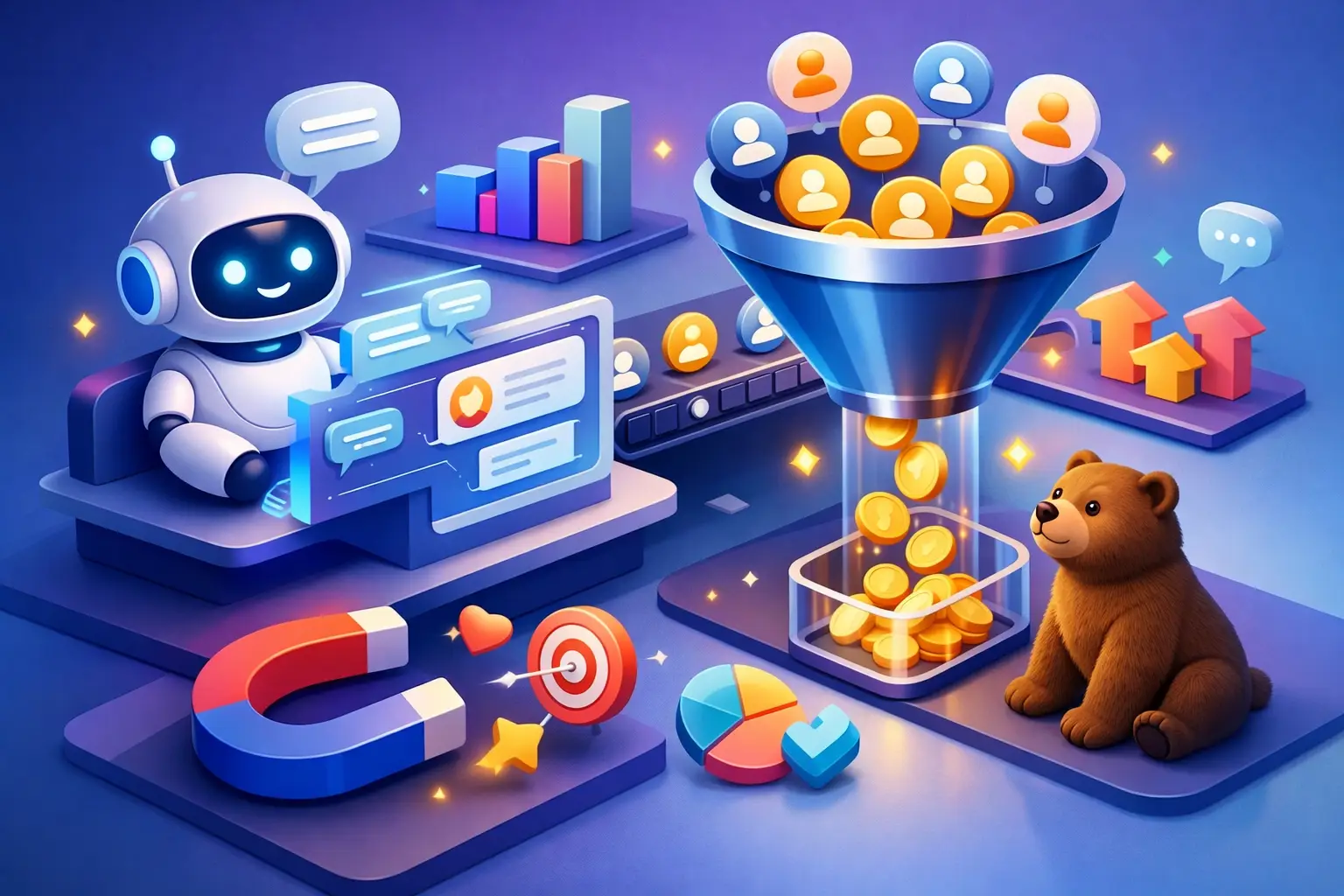
AI Chatbot for Lead Generation That Converts
An AI chatbot for lead generation helps capture, qualify, and convert more website visitors into sales-ready leads without slowing your team down.
A lot of businesses spend heavily to get traffic, then lose the lead in the first 30 seconds. The visitor has a question, cannot find the answer fast enough, and leaves. That is exactly where an ai chatbot for lead generation can change the economics of your website.
Not because chatbots are trendy. Because speed wins. When a prospect lands on your site, asks about pricing, service fit, timing, or availability, the business that responds first usually gets the next conversation. A well-built chatbot gives you that response layer instantly, without making your team sit in live chat all day.
What an AI chatbot for lead generation actually does
At its best, an AI chatbot does more than greet visitors with a canned message. It turns passive traffic into active conversations. It answers common questions, guides users to the right service, filters out low-fit inquiries, and collects lead details in a way that feels natural instead of forced.
That matters because most websites are still built like brochures. They present information, but they do not actively move people toward action. An AI chatbot adds interaction. It can ask what the visitor needs, where they are in the buying process, and what kind of timeline or budget they are working with. That gives your sales team context before they ever pick up the phone.
For small and mid-sized businesses, this is often the difference between getting more form fills and getting better leads. More volume alone is not the goal. Better qualification is.
Why businesses are using AI chatbots for lead generation now
The pressure on digital channels is simple. Paid traffic is expensive, organic traffic takes time, and website conversion rates are often weaker than they should be. If you are already investing in SEO, ads, web design, or content, you need your site to convert a higher percentage of the people who arrive.
That is why AI chatbots are getting real attention from growth-focused companies. They sit at the point of conversion. They help visitors who are ready to ask questions but not ready to call. They also create a path for people who would never fill out a traditional contact form.
There is another reason this matters. Buyers expect immediate answers. Even in B2B, people do their research after hours, compare vendors quickly, and move on fast if the experience feels slow. A chatbot helps your business stay responsive even when your office is not.
Where an AI chatbot helps most
The strongest use case is not every website visitor. It is high-intent traffic.
If someone lands on a service page, pricing page, landing page, or ad destination, they usually have a specific question. They may want to know whether you serve their industry, how long a project takes, whether you handle implementation, or what the next step looks like. A chatbot can answer these questions and guide them toward booking, requesting a quote, or sharing project details.
It also performs well when your sales process has a qualification layer. If your team needs to know company size, service need, timeline, budget range, or geography before taking a call, the chatbot can gather that information early. That saves time and helps your team prioritize the leads with the strongest buying signals.
For businesses with multiple services, a chatbot can also route visitors correctly. Instead of sending everyone to one generic form, it can steer a prospect toward web development, paid advertising, AI automation, or another relevant path. That sounds small, but it reduces friction and improves close rates.
What separates a useful chatbot from a bad one
A bad chatbot feels like a roadblock. It pops up too early, asks too many questions, fails to understand intent, and traps users in rigid flows. Most businesses that say chatbots do not work have usually deployed one like this.
A useful chatbot is different. It is trained on your actual services, common objections, and lead qualification criteria. It knows when to answer, when to ask, and when to hand off. It is connected to your CRM or intake process so conversations do not disappear into a dashboard no one checks.
It also sounds like your brand. That point gets overlooked. If your website position is premium, strategic, and results-driven, the chatbot cannot sound generic or robotic. The conversation needs to feel aligned with your sales process and your market position.
The trade-offs to think through
An ai chatbot for lead generation is not a magic fix for a weak offer, poor traffic quality, or a confusing website. If visitors do not understand what you sell, a chatbot will not solve the core problem. If your ad targeting is off, it may simply capture more unqualified inquiries faster.
There is also a balance between automation and trust. Some buyers want quick answers. Others want to know there is a real team behind the screen. That is why the best implementations make the chatbot part of the process, not the whole process. It should move the conversation forward, then create a clean path to a human when needed.
Accuracy matters too. If the chatbot gives vague or incorrect information about pricing, service scope, or timelines, it creates sales friction instead of reducing it. That is why setup, training, and oversight matter more than the tool itself.
How to use an AI chatbot for lead generation strategically
Start with the pages that already show buying intent. Service pages, landing pages, pricing-related pages, and high-traffic contact paths are usually the best first placements. You do not need the chatbot everywhere on day one.
Then define the business goal clearly. Do you want more booked calls, more qualified form replacements, better lead routing, or after-hours capture? Different goals require different conversation flows. A chatbot built to answer support questions is not the same as one built to qualify sales opportunities.
Next, map the qualifying questions that actually matter to your team. Keep this tight. Ask only what improves routing or sales readiness. If you ask for too much too early, conversion drops. If you ask for too little, your team wastes time. The right flow gets enough information to move the lead forward without turning the interaction into a form disguised as chat.
After that, connect the chatbot to your systems. If the lead capture process stops at a transcript, the value is limited. The real gain comes when conversation data feeds your CRM, triggers follow-up, alerts your team, or pushes prospects directly into booking workflows.
Finally, review performance like any other conversion asset. Look at conversation starts, completion rate, qualified lead rate, booked meetings, and close quality. If the chatbot creates more conversations but fewer real opportunities, the flow needs work.
The website still matters
Businesses sometimes look at AI as a shortcut around weak digital infrastructure. It is not. The chatbot works best when the website already has clear messaging, strong service pages, fast load times, and a conversion-focused structure.
That is especially true for B2B companies with considered buying cycles. Prospects will use the chatbot, then evaluate your credibility through the rest of the site. If the experience feels disconnected, trust drops fast.
This is why the smartest approach is integrated. Your website, paid traffic, SEO, CRM, lead handling, and AI tools should support the same pipeline. When they do, the chatbot becomes a force multiplier instead of a novelty feature.
Is it right for every business?
Not always. If your website gets very low traffic, the bigger opportunity may be traffic generation first. If your sales process is highly relationship-driven and every deal is custom from the first interaction, the chatbot may need a lighter touch. If your service is simple and customers already convert easily, a chatbot may add less value than improving landing pages or offer positioning.
But if you are already attracting visitors and losing too many before the first conversation, the case gets stronger quickly. That is where an AI chatbot can create immediate lift by capturing intent that would otherwise disappear.
For companies focused on growth, this is the real question: are you making it easy for ready-to-buy visitors to engage the moment they care most? If the answer is no, there is room to improve.
A strong AI chatbot strategy is not about replacing your team. It is about making your website work harder, respond faster, and qualify smarter. If you want to turn more traffic into real pipeline, this is one of the clearest places to start. If you want to see what that could look like in your business, request a call with BearSolutions and build a setup that is designed to convert, not just chat.