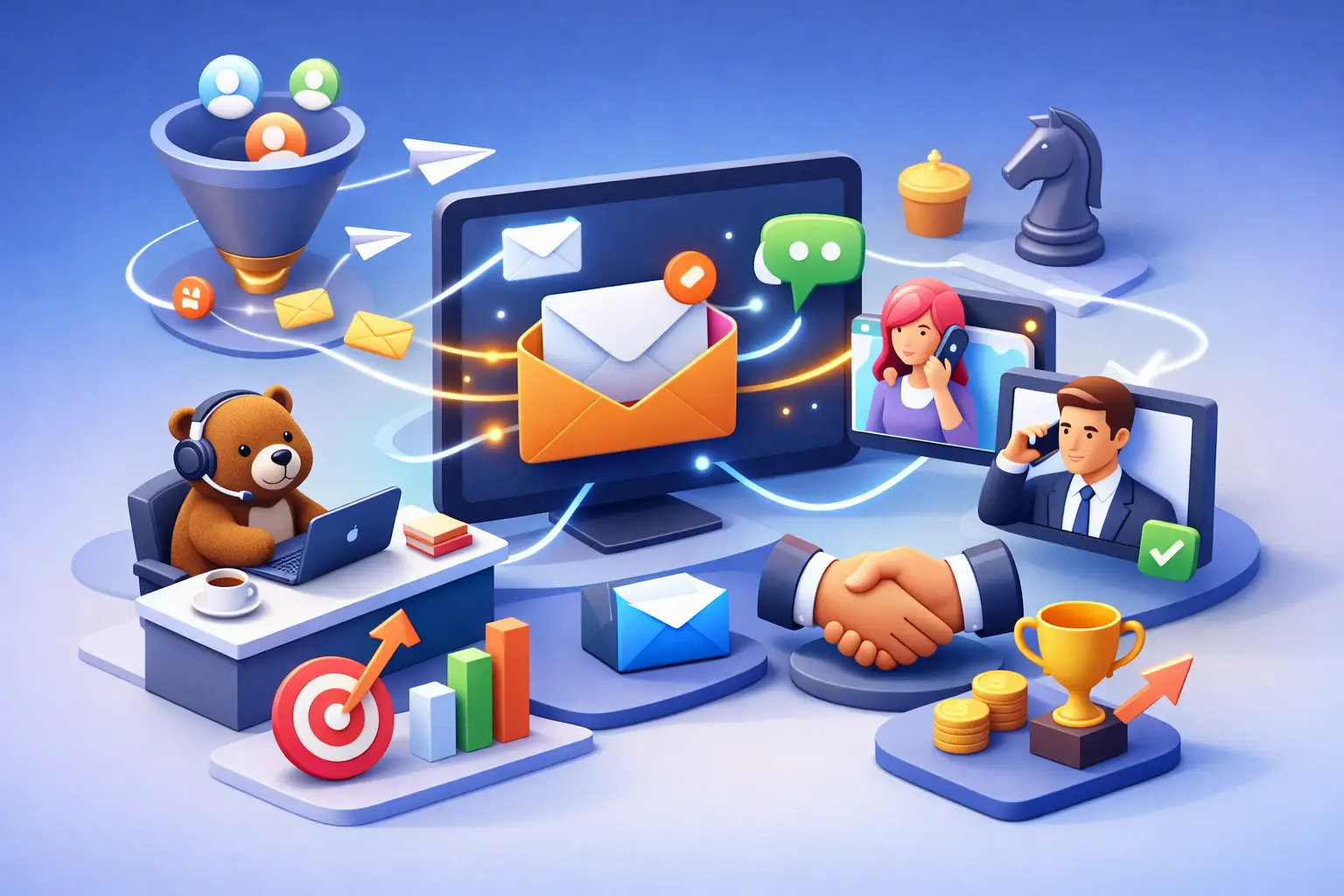
Automated Lead Follow Up That Wins Deals
Automated lead follow up helps businesses respond faster, stay consistent, and close more deals without wasting sales time or missing hot prospects.
A lead fills out your form at 9:14 p.m. By 9:19, they are already looking at a competitor. That is the real cost of slow response time, and it is exactly why automated lead follow up has become a revenue issue, not just an operations upgrade.
For small and mid-sized businesses, speed and consistency usually decide whether marketing turns into pipeline or just traffic. You can spend on ads, SEO, content, and a stronger website, but if your follow-up breaks after the form submission, the whole system leaks money. Automation fixes that - when it is designed around buying behavior, not just convenience.
What automated lead follow up actually does
Automated lead follow up is the process of triggering messages, tasks, and sales actions the moment a prospect takes a step. That might be a form fill, booked consultation, quote request, abandoned cart, downloaded resource, or inbound call. Instead of relying on someone to notice the lead and remember what to do next, the system responds immediately.
That response can be simple or sophisticated. A basic setup sends an email confirmation and alerts a sales rep. A stronger setup routes the lead by service type, sends a text message, scores intent, creates a CRM record, and starts a timed sequence based on where the lead came from.
The difference matters. Automation is not just about sending more messages. It is about sending the right message at the right time, through the right channel, with a clear next step.
Why fast follow-up beats more lead volume
A lot of businesses think they have a lead generation problem when they really have a lead handling problem. They ask for more traffic before they fix the response gap. That is expensive.
If your sales team replies hours later, or the lead gets one generic email and nothing else, you are forcing good prospects to do the work of staying interested. Most will not. They move on, forget, or choose the company that made the buying process easier.
Automated lead follow up changes the economics of acquisition. It protects the money you already spend to create demand. It also gives your team a repeatable process, which is critical if you want to scale without adding chaos.
For owner-led businesses, this is even more important. Many founders still sit too close to inbound sales. When leads depend on one person checking messages, response quality rises and falls with that person's schedule. That is not a growth system. That is a bottleneck.
Where most automated follow-up goes wrong
Bad automation is easy to spot. It feels generic, mistimed, and oddly robotic. The lead gets a message that sounds like it was written for everyone, and it asks for commitment before trust has been built.
The biggest mistake is treating every lead the same. Someone requesting a demo is not equal to someone downloading a guide. Someone from a high-intent Google Ads campaign should not enter the same sequence as someone casually browsing from social media. If the system ignores intent, source, and urgency, performance drops fast.
Another common problem is over-automation. Not every touchpoint should stay automated all the way through. The best systems know when to switch from automation to human outreach. A prospect who clicks pricing pages twice, opens every email, and replies to a text should not keep getting generic nurture content. That is the moment for sales to step in.
How to build automated lead follow up that feels personal
The best follow-up systems are built in layers. First, they acknowledge the lead immediately. Then they qualify, route, and nurture based on behavior. Finally, they create clear handoffs so sales and marketing stay aligned.
Start with the first five minutes
Your first response should happen fast enough to match intent. For a quote request or service inquiry, that often means an instant email and a near-immediate text or notification to your team. The message should confirm the request, set expectations, and give the prospect a frictionless next step.
That next step matters more than most businesses think. If the lead has to wait without context, momentum fades. If they can book a call, reply by text, or see what happens next, you keep control of the interaction.
Segment by source and intent
Not all leads deserve the same cadence. A high-intent lead should get tighter follow-up, faster rep attention, and stronger calls to action. A lower-intent lead may need education first.
This is where your tech stack matters. When your website, CRM, forms, ad channels, and automation platform are connected, you can trigger smarter workflows. A paid search lead asking for pricing can follow a different path than a newsletter subscriber who downloaded a resource. That is how automation starts acting like strategy instead of software.
Use more than one channel
Email still matters, but email alone is not enough for many businesses. Text, voicemail drops, CRM tasks, audience retargeting, and internal alerts can all support conversion when used carefully.
The trade-off is obvious. More channels can improve response rates, but they can also feel aggressive if you overdo them. A local service business may benefit from text-first follow-up. A B2B company with a longer sales cycle may need email-first nurturing with timely rep outreach. It depends on the sales process, average deal size, and how buyers prefer to respond.
Give sales context, not just contacts
Automation should make your team sharper, not busier. When a lead reaches sales, the rep should see campaign source, pages viewed, form details, previous replies, and engagement signals. That context helps them start better conversations.
Without it, automation just creates noise. Reps waste time asking questions the system already knows, and prospects feel like they are starting over every time they speak to someone.
What strong automated lead follow up looks like in practice
A good system is usually quiet in the background and aggressive where it counts. It captures the lead, responds instantly, assigns ownership, and keeps moving until the prospect either converts or clearly disengages.
For example, a home services company might trigger an instant thank-you email, a text confirming receipt, and a task for the sales coordinator to call within ten minutes. If the lead does not answer, the system can send a follow-up message the next day and a final check-in two days later.
A B2B service company might use a different rhythm. The prospect submits a consultation request, receives a short confirmation email, gets routed by service line, and enters a sequence with case-study content, a reminder to book time, and alerts for the sales team when the lead returns to key pages.
The point is not complexity for its own sake. The point is to remove dead time, reduce drop-off, and create a buying experience that feels organized and credible.
The tech stack behind better follow-up
If your website, CRM, forms, ad platforms, and communication tools are disconnected, follow-up will always be harder than it should be. You end up patching together alerts, spreadsheets, inboxes, and manual reminders. That slows down response time and makes attribution messy.
A modern setup connects data from the first click to the closed deal. That gives you cleaner routing, better reporting, and smarter optimization. You can see which campaigns produce qualified leads, which messages drive replies, and where prospects stall.
This is where businesses gain an edge. Not because they installed automation software, but because they built a system that supports marketing, sales, and operations together. That is a big difference.
When automation is worth fixing first
If you are generating leads but closing inconsistently, fix follow-up before increasing ad spend. If your team says lead quality is weak, check response times and message relevance before blaming the campaign. If owners or managers are still manually chasing every inquiry, build the system before hiring more people.
Growth usually does not break because demand disappeared. It breaks because the backend process cannot handle the demand already there.
Businesses that dominate online rarely win on traffic alone. They win because their systems respond faster, qualify better, and create less friction from first click to signed deal. Automated lead follow up is one of the highest-leverage places to improve that system.
If your current process still depends on inbox checks, sticky notes, and good intentions, it is time to tighten it up. A smart automation setup can turn missed chances into booked calls, stronger sales conversations, and more revenue from the leads you already paid to earn. If you want to build a follow-up system that is fast, connected, and designed for growth, BearSolutions can help you put the right tech behind it - and turn response time into a competitive advantage.
The businesses that win are not always the ones with the biggest budgets. They are the ones that respond like they came prepared.