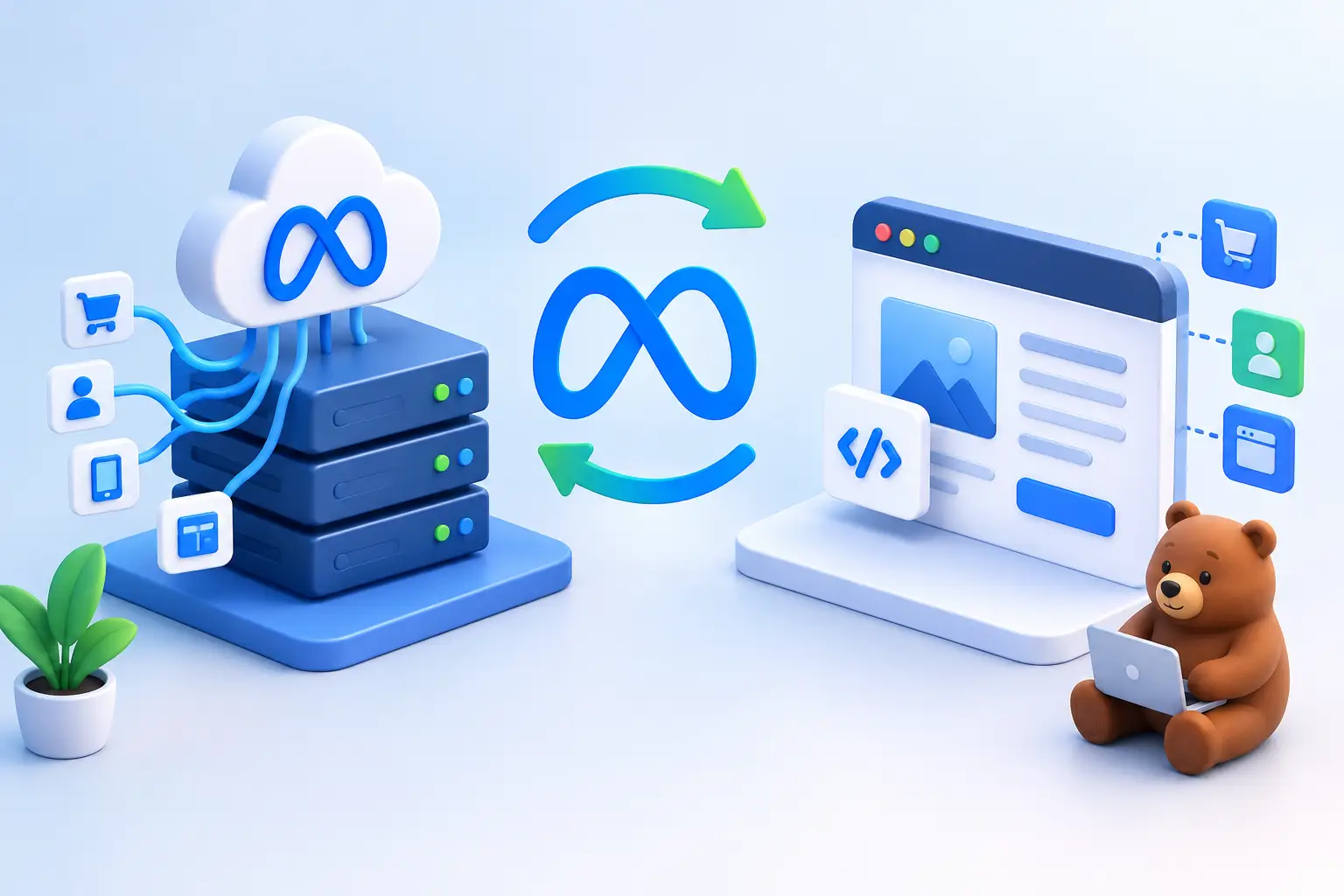
Meta CAPI vs Facebook Pixel: What’s the Difference?
Meta CAPI vs Facebook Pixel: what's the difference? Learn how each tracking tool affects attribution, ad targeting, and revenue-focused campaign decisions.
Meta CAPI vs Facebook Pixel: what's the difference? For businesses investing real money in Facebook and Instagram ads, the answer affects more than a reporting dashboard. It affects whether Meta can see the leads, purchases, booked calls, and revenue your campaigns create - and whether it can use that data to find more qualified customers.
The simple answer is that the Facebook Pixel collects event data through a visitor’s browser, while Meta’s Conversions API, commonly called CAPI, sends event data directly from your server or connected systems to Meta. They are not competing tools. When configured correctly, they work together to give your business clearer measurement and stronger ad optimization.
Meta CAPI vs Facebook Pixel: The Core Difference
The Meta Pixel is a snippet of code placed on your website. When someone visits a page, submits a form, adds a product to a cart, or completes a purchase, the pixel can send that activity back to Meta through the browser.
For years, this was the standard setup for Meta advertising. It remains valuable because it can capture website behavior quickly and support key advertising functions such as retargeting, conversion tracking, and audience building.
The limitation is that browser-based tracking is no longer guaranteed. Ad blockers, privacy tools, cookie restrictions, browser settings, and Apple’s privacy changes can prevent or limit the pixel’s ability to send data. A customer may fill out your lead form, but Meta may never receive the event. Your reporting looks weaker than reality, and the ad platform has less information to improve delivery.
Meta CAPI addresses that gap. Instead of relying only on the visitor’s browser, it sends conversion events from a server, website backend, CRM, ecommerce platform, or other connected source directly to Meta. That creates a more durable path for data collection.
For example, a service business might capture a lead through its website, qualify that lead in a CRM, and later mark it as a closed deal. CAPI can help send the relevant lead and sales events to Meta, allowing the platform to learn which campaigns create revenue rather than just cheap form submissions.
What the Facebook Pixel Does Well
The Pixel remains the front-line tracker for on-site activity. It is particularly useful for measuring page views, button clicks, content views, product views, checkout actions, lead submissions, and purchases that happen immediately on your website.
It also supports retargeting. If someone visits a service page but does not request a quote, the Pixel can help you show that person a relevant ad later. For ecommerce brands, it can build audiences around shoppers who viewed specific products or abandoned their carts.
The Pixel is usually easier to deploy than a full server-side implementation. A basic installation can be completed through a tag manager, website platform integration, or custom development work. That lower barrier makes it a logical starting point for many smaller businesses.
But a starting point is not always a finished measurement strategy. Pixel-only tracking can leave blind spots, especially when your sales process includes phone calls, CRM follow-up, invoices, appointments, or an offline close. If your team is making decisions based on incomplete data, your ad budget can drift toward the wrong audience and the wrong campaign.
What Meta CAPI Does Better
CAPI gives Meta a server-side signal, which means data does not depend entirely on browser cookies or scripts loading correctly on a customer’s device. It can improve event coverage when the Pixel misses activity due to privacy settings or technical blockers.
More importantly, CAPI can connect advertising to business outcomes that happen after the initial website visit. That matters for companies with longer buying cycles. A home services company, B2B provider, law firm, or professional practice may value a booked consultation far more than a form fill. A form submission is a signal. A qualified opportunity or signed client is the outcome.
With the right setup, CAPI can feed stronger outcome data back to Meta. Over time, this helps the platform optimize toward people who are more likely to take valuable actions, not just people who click quickly or submit low-intent forms.
CAPI also creates better resilience. Privacy changes will continue. Platforms will keep limiting third-party tracking. Businesses that depend on paid advertising need a measurement setup built for that reality, not one designed for the web of five years ago.
That said, CAPI is not magic. It cannot repair a weak offer, poor landing page, slow website, or sales team that fails to follow up. It improves the quality of data available to Meta. Your broader marketing system still needs to convert.
Why Using Both Is Usually the Right Move
For most businesses, the best answer is not Pixel or CAPI. It is Pixel and CAPI, configured to work together without double-counting conversions.
The Pixel provides real-time browser activity and helps power practical website audiences. CAPI provides a second, more reliable route for important conversion events and can incorporate data from systems beyond the browser. When both send the same event, Meta uses event matching and deduplication to recognize that they represent one action, not two.
Deduplication is a technical detail with major consequences. If your Pixel and CAPI both report the same purchase without the proper event ID setup, Meta may count two purchases. That inflates results, distorts return on ad spend, and leads to bad budget decisions.
A quality implementation aligns event names, event IDs, timestamps, customer information parameters, and source data. It also confirms that the events shown in Meta’s reporting match what actually happened in your website, CRM, or ecommerce system.
Which Events Should Your Business Send?
The right events depend on how your business makes money. A local service provider may prioritize lead submissions, phone calls, scheduled estimates, qualified leads, and closed jobs. An ecommerce store may focus on product views, add-to-cart events, checkout starts, purchases, and repeat orders.
Do not send every possible event simply because you can. Meta needs signals that represent meaningful progress toward revenue. Sending vague, low-value activity can make optimization less focused.
For lead generation, this often means separating a basic form submission from a qualified lead. A campaign that produces 100 unqualified inquiries is not automatically better than one that produces 20 leads your sales team can close. When CAPI is connected to your CRM, you can begin closing that reporting loop.
For ecommerce, purchase value and currency data are essential. Revenue-aware optimization is far more useful than treating every order as equal, especially when product margins and average order values vary.
The Privacy and Data Quality Trade-Off
Server-side tracking does not remove privacy responsibilities. CAPI should be implemented with a clear understanding of consent, your privacy policy, applicable state laws, and the data you are authorized to share. Better tracking is not a reason to collect or transmit data carelessly.
Data quality matters just as much as data volume. Customer details used for matching should be normalized correctly, event information should be accurate, and systems should be tested regularly. A broken integration can quietly create misleading reports for weeks.
This is where businesses often lose ground. They install a Pixel, connect an automated CAPI integration, and assume the work is finished. Then campaign data, CRM records, and actual sales tell different stories. Technology should create clarity, not a new layer of confusion.
When You Need Professional CAPI Setup
A basic ecommerce integration may be enough for a simple store with a straightforward checkout. But custom websites, multi-step forms, appointment platforms, CRMs, call tracking, offline sales, and B2B pipelines usually need a more deliberate setup.
The goal is not to add technology for its own sake. The goal is to create a tracking architecture that shows which channels create real business value, gives Meta better optimization signals, and helps your team invest with confidence.
BearSolutions Marketing & Technology helps businesses connect website performance, paid media, CRM data, and conversion tracking into one growth-focused system. If your Meta ads are generating activity but your reporting does not clearly show revenue, qualified leads, or return on spend, it is time to tighten the data behind the campaign.
A stronger ad account starts with a stronger signal. Get your Pixel and CAPI setup reviewed, identify the gaps in your conversion data, and request a call with BearSolutions to build tracking that supports smarter growth.