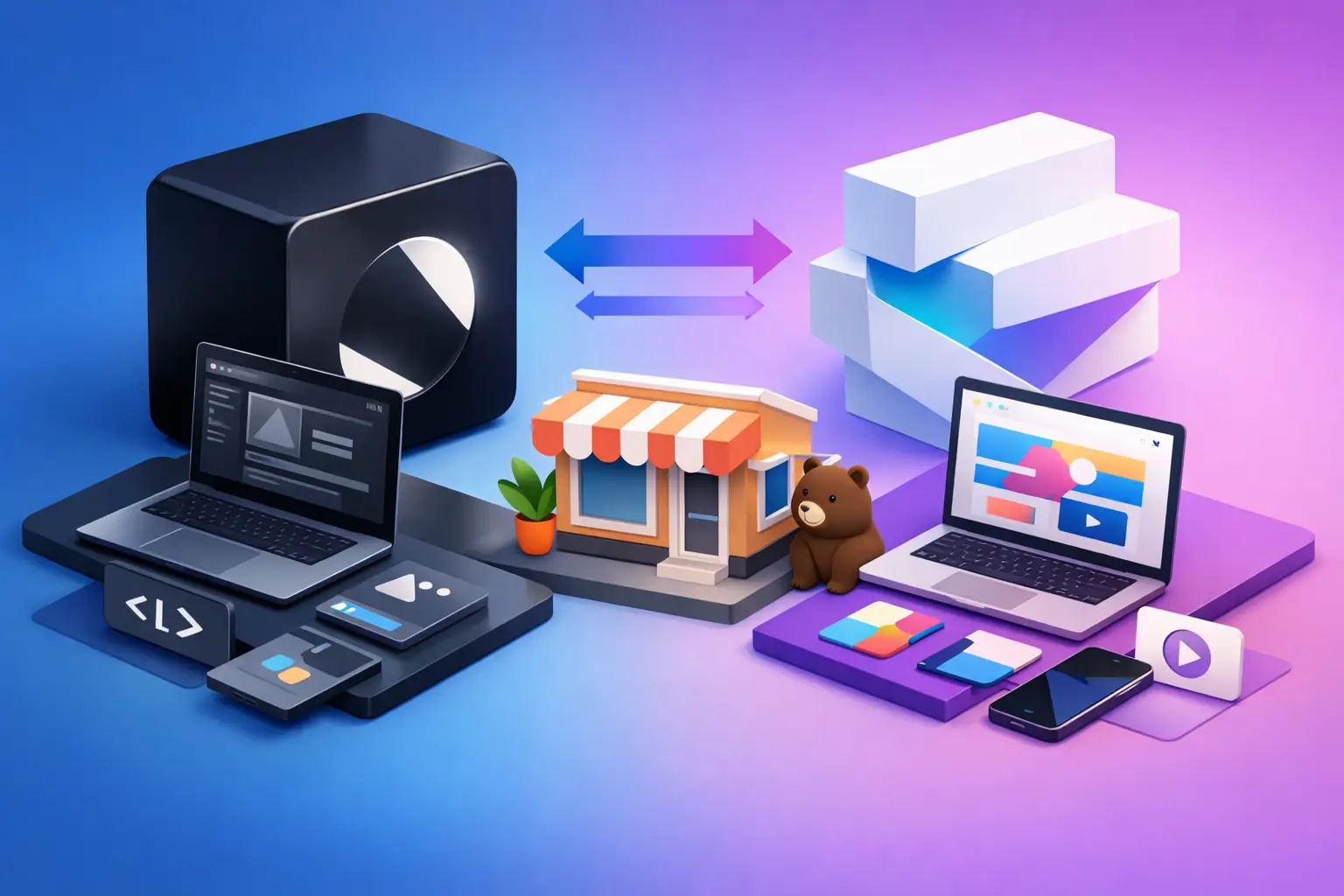
Next.js vs Framer for Small Businesses
Comparing next.js vs framer for small businesses? Learn which platform fits your goals, budget, SEO needs, and future growth plans.
If your website needs to do more than look good, the choice between next.js vs framer for small businesses gets serious fast. A clean design matters, but so do speed, SEO, lead generation, integrations, and how easily your site can grow with your company. The wrong platform can leave you boxed in just when marketing starts working.
This is not a design preference debate. It is a business decision. For a small business, your website is often your first salesperson, your credibility check, and your lead capture system all at once. So the real question is not which tool is trendier. It is which one helps you win now without creating expensive problems later.
Next.js vs Framer for small businesses: the real difference
Framer is best understood as a design-first website builder. It is fast to launch, visually polished, and friendly for teams that want to make edits without touching code. If your priority is getting a modern marketing site live quickly, Framer can be a strong option.
Next.js is a React-based framework built for custom websites and web applications. It gives developers far more control over structure, performance, integrations, content modeling, and long-term scalability. If your site is tied closely to growth, SEO, complex functionality, or a broader tech stack, Next.js usually has the edge.
That difference matters because many small businesses start with one goal and quickly add three more. A simple site becomes a lead-generation engine. A brochure site turns into location pages, landing pages, gated content, CRM workflows, analytics dashboards, and custom forms tied to operations. Framer can handle some of that. Next.js is built for it.
When Framer makes sense
Framer is a smart choice when speed and simplicity matter more than deep customization. If you are a newer business, launching a campaign, testing a new offer, or replacing an outdated site with something cleaner, Framer can get you there quickly.
It is especially useful for businesses that want a strong visual presence without a long development cycle. A local service company, consultant, startup, or creative brand may not need custom application logic on day one. They need a site that looks current, loads well, and gives people enough confidence to call, book, or fill out a form.
Another advantage is ease of editing. Non-technical teams can often make content updates with less friction. That matters if you want more control internally and do not want to depend on a developer for every change.
But there is a trade-off. Framer works best when the site stays relatively straightforward. Once your needs move into custom workflows, advanced SEO structures, database-driven content, or complex integrations, the convenience can start to wear thin.
When Next.js is the better move
Next.js is the better choice when your website is part of a larger growth system, not just a digital brochure. If you care about technical SEO, conversion optimization, custom landing pages, performance tuning, content scale, and future expansion, it gives you more room to build correctly from the start.
That matters for established small businesses trying to compete in crowded markets. If you serve multiple locations, run paid campaigns, rely on inbound leads, or plan to add advanced features over time, Next.js gives you more control over the details that impact results.
You can create highly tailored user experiences, connect your CMS the way you want, integrate cleanly with marketing tools, and optimize performance at a deeper level. That flexibility is valuable when your site needs to support not just branding, but revenue.
The trade-off here is clear too. Next.js typically requires a stronger development process. It takes more planning, more technical expertise, and usually a larger initial investment than a builder-led site. For the right business, that investment pays back. For the wrong one, it can be more than you need.
SEO, speed, and lead generation
For most small businesses, this is where the platform decision starts to affect real money.
Framer can produce fast, attractive pages and it has improved a lot as a marketing-site platform. For simpler sites, it can perform well enough for search visibility and user experience. If your SEO strategy is light, your site structure is simple, and your market is not extremely competitive, Framer may do the job.
Next.js gives you more precision. That matters when SEO is a core acquisition channel. You get deeper control over rendering strategy, metadata, site architecture, dynamic pages, structured content, and performance optimization. If you are building a serious content engine or location-based SEO strategy, that flexibility can become a competitive advantage.
Lead generation follows the same pattern. A Framer site can absolutely convert if the messaging, offer, and user flow are strong. But if you want advanced form logic, custom integrations with your CRM, personalized landing pages, or more sophisticated tracking, Next.js usually gives you a cleaner foundation.
In other words, Framer can help you look credible and start converting. Next.js is better when you want to optimize aggressively and scale what works.
Budget now vs cost later
A lot of businesses make this decision based only on launch cost. That is understandable, but it is not the full picture.
Framer often wins on speed and upfront affordability. You can move faster, reduce development hours, and get a sharp website online without a heavy build. If you need momentum now, that can be the right move.
Next.js usually costs more at the beginning because it is more custom. But for businesses with larger ambitions, it may cost less over time than rebuilding later. Replatforming is rarely cheap. If you already know your site will need advanced SEO, content growth, integrations, or custom functionality, starting on a stronger foundation can save time and money down the road.
This is where honest planning matters. Are you trying to launch fast and prove demand? Or are you building a digital asset designed to support years of marketing, sales, and operational growth? The answer should shape the platform choice.
The best fit by business stage
If you are an early-stage business, Framer is often enough. It helps you get live, look professional, and start collecting leads without overbuilding. That speed can be a real advantage when market presence matters more than engineering depth.
If you are an established small business with active marketing, growing traffic, and clearer systems, Next.js starts to make more sense. You are no longer just getting online. You are improving conversion rates, strengthening search visibility, and building a site that supports ongoing campaigns.
If you are a business with custom workflows, web app features, or a need to tightly connect your website to your operations, Next.js is usually the stronger long-term decision. Framer is not trying to be a full custom development framework, and that is fine. It is just a different category of solution.
So which one should a small business choose?
If your main goal is to launch a polished marketing site quickly, keep editing simple, and avoid overcomplicating the build, choose Framer.
If your goal is to build a high-performance website that supports aggressive SEO, custom functionality, deeper integrations, and future scale, choose Next.js.
That is the clearest way to think about next.js vs framer for small businesses. Framer is great for speed, simplicity, and design-led launches. Next.js is stronger for control, performance, and growth infrastructure.
The mistake is not choosing one over the other. The mistake is choosing a platform that does not match the role your website needs to play in the business.
A small business website should not just exist. It should help you dominate online, generate demand, and support the next stage of growth. If you are weighing Framer against Next.js and want a build strategy that fits your goals, budget, and marketing plan, BearSolutions can help you map the right setup before you invest in the wrong one.
The smartest platform is the one that still makes sense after your traffic grows, your campaigns scale, and your website stops being a placeholder and starts becoming a real sales asset.