SEO vs PPC for Small Business
SEO vs PPC for small business: learn when to invest in each channel, how costs differ, and which strategy drives leads faster and smarter.
A lot of small business owners ask the same question right after launching a new website or trying to fix a weak lead pipeline: should we put money into SEO or ads first? When you compare seo vs ppc for small business, the real issue is not which channel is better in general. It is which one matches your timeline, margins, market, and growth goals right now.
That matters because both channels can work. Both can waste money too. The difference usually comes down to execution, patience, and whether your business needs traction this month or market share over the next year.
SEO vs PPC for small business: the real difference
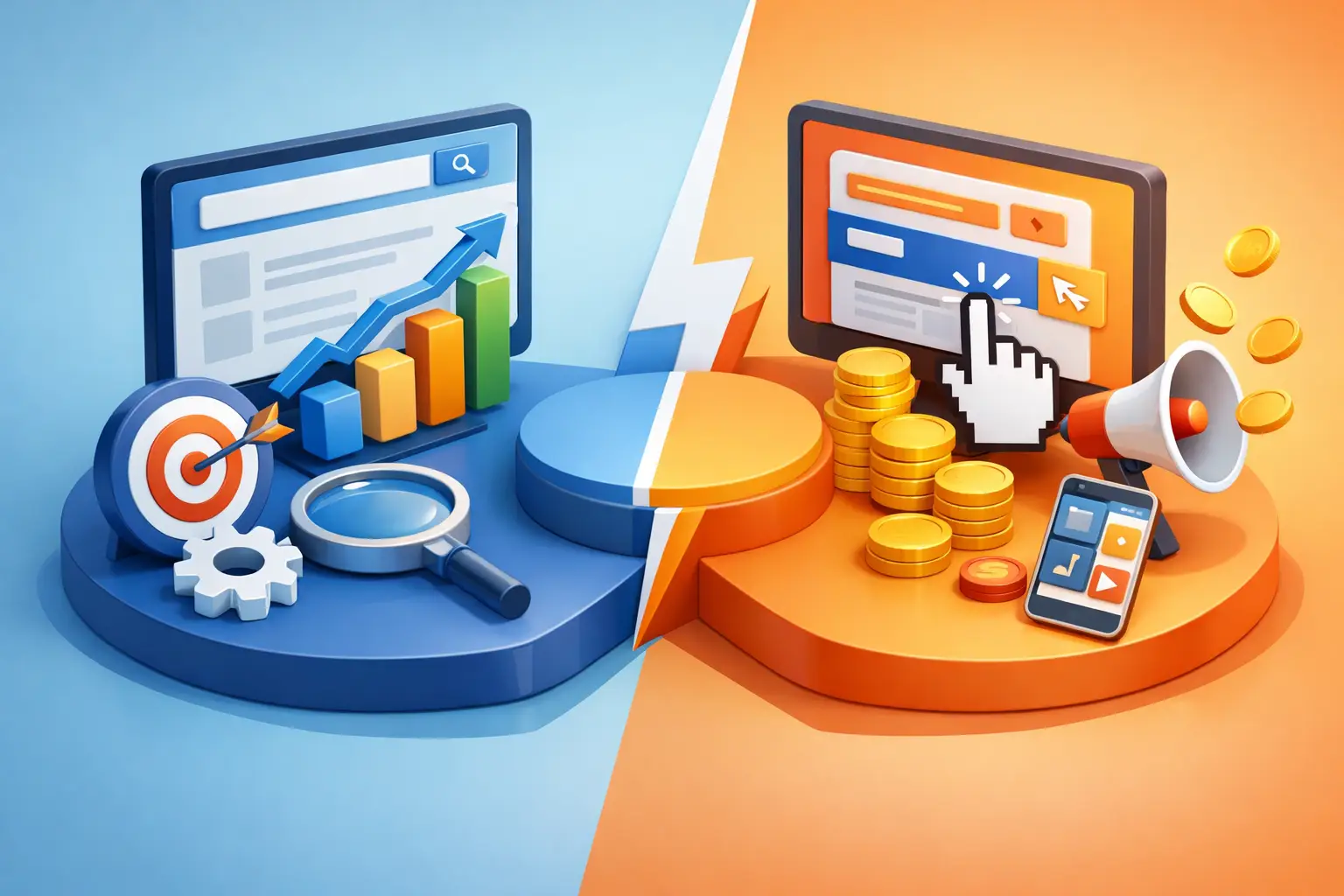
SEO earns visibility over time. PPC buys visibility immediately. That is the cleanest way to frame it.
Search engine optimization helps your business show up in organic search results when people are actively looking for your services. You invest in technical performance, content, local signals, website structure, and authority so your site becomes easier for search engines to trust and rank.
PPC, or pay-per-click advertising, puts your business in front of the same search audience through paid placements. You bid on keywords, build campaigns, and pay when someone clicks. If your campaigns are built well, you can start generating traffic and leads almost right away.
For a small business, that difference is not academic. It affects cash flow, sales forecasting, and how quickly marketing can support operations. If you need leads now because your pipeline is thin, PPC usually gets attention faster. If you want to reduce dependency on ad spend over time, SEO becomes a stronger long-term asset.
When SEO makes more sense
SEO is often the better play when your business wants sustainable visibility instead of renting every click. If you operate in a market where customers search consistently for your services, strong SEO can turn your website into a lead-generating asset that works every day without paying for each visitor.
This is especially true for local service businesses, professional firms, home services, healthcare practices, and B2B companies with longer buying cycles. If people compare options, research before contacting you, and care about credibility, organic search has real value. High rankings do more than bring traffic. They reinforce trust.
SEO also tends to perform well when your margins are healthy enough to support a longer return window. You may not see major gains in the first month or two, but the payoff compounds. A properly built site, clean technical setup, fast page speed, strong service pages, local optimization, and useful content can keep producing leads long after the work is done.
That said, SEO is not magic. If your market is highly competitive, your website is weak, or your business needs immediate volume, SEO alone can feel slow. It also requires real strategy. Publishing random blog posts and hoping for rankings is not a growth plan.
What SEO gives small businesses
SEO gives you stronger long-term economics, more brand credibility, and broader visibility across the buying journey. It can help you capture high-intent searches, informational searches, and local queries at the same time.
It also improves the foundation of your digital presence. Better technical SEO usually means a better website. Better content usually means clearer messaging. Better local optimization usually means more trust signals. Those improvements help every marketing channel, not just search.
When PPC makes more sense
PPC is the better choice when speed matters. If you need leads this quarter, are entering a new market, launching a service, or trying to validate demand quickly, paid search can move faster than SEO.
That speed has real business value. You can test offers, messaging, landing pages, and keyword intent before committing months to an organic strategy. You can also control geography, budget, schedule, and audience with much more precision.
For small businesses, PPC is often the fastest way to answer practical questions. Which service gets the best response? Which locations convert best? Which message drives calls instead of just clicks? Those are expensive questions to guess at and relatively quick to test with paid traffic.
PPC also works well in high-intent scenarios where someone needs a solution now. Emergency services, legal help, urgent repairs, same-day appointments, and high-value B2B searches can justify aggressive ad spend if the conversion path is tight and the sales value is there.
The trade-off is simple. Once you stop paying, visibility stops too. And if campaigns are poorly built, small businesses can burn through budget fast with very little to show for it.
What PPC gives small businesses
PPC gives you speed, control, and cleaner testing. It can generate early momentum and produce data that sharpens the rest of your marketing. Done right, it is not just a lead channel. It is a market intelligence tool.
It also lets you compete in search results even if your organic presence is not strong yet. That matters for newer businesses, newer websites, or companies trying to break into a crowded category.
Cost, timeline, and risk
This is where the seo vs ppc for small business decision usually gets serious.
SEO often looks cheaper at first because you are not paying per click. But good SEO still requires investment. You need technical work, content, optimization, design alignment, and ongoing strategy. The return can be excellent, but it usually takes time.
PPC gives you immediate traffic, but the meter runs the entire time. Competitive industries can drive click costs up fast, and a weak landing page can make that spend inefficient. If your campaign setup is poor, you may pay for traffic that never had a real chance to convert.
Risk works differently in each channel. With SEO, the risk is slower payoff and inconsistent results if the strategy lacks depth. With PPC, the risk is faster spending and weaker margins if conversion rates are low. Neither channel is safe just because it is popular.
That is why smart decision-makers do not ask which one is cheaper. They ask which one can produce profitable customer acquisition based on current business realities.
The strongest move is often both
For many companies, the best answer is not SEO or PPC. It is using both with clear roles.
PPC can generate immediate leads while SEO builds long-term equity. Paid search can target bottom-of-funnel terms where intent is highest, while SEO develops broader authority across service pages, local searches, and supporting content. The data from PPC can also improve SEO by showing which keywords convert, which offers resonate, and which landing page structures work best.
At the same time, SEO can lower future dependence on paid traffic by creating consistent organic visibility. Over time, that balance can improve efficiency and give your business more control over growth.
This integrated approach is where many small businesses gain an edge. Instead of treating web design, search visibility, and advertising as separate efforts, they build a system where each part supports the others. That is the difference between running campaigns and building a real digital growth engine.
How to decide where to start
Start with your timeline. If you need pipeline now, PPC deserves strong consideration. If you can invest for compounding returns, SEO should be in the mix from day one.
Then look at your customer value. If one new customer is worth significant revenue, PPC may be easier to justify even with higher click costs. If your margins are tighter and you need lower acquisition costs over time, SEO becomes more attractive.
Next, evaluate your website. If your site is outdated, slow, or unclear, neither channel will perform as well as it should. Traffic without conversion is just expensive activity. Before scaling SEO or PPC, make sure the site can support trust, clarity, and action.
Finally, consider your market. In some industries, organic competition is fierce and slow to break through. In others, paid search is inflated and difficult to make profitable. Strategy should reflect the landscape, not generic advice.
A capable partner can help you model this correctly. At BearSolutions, that usually means looking at the full system - website performance, search opportunity, conversion flow, ad economics, and growth targets - before recommending where to press harder.
Which channel wins?
If your business needs speed, PPC often wins first. If your business wants staying power, SEO usually wins over time. If your business wants to dominate online, the real winner is the combination that fits your goals, your budget, and your ability to execute.
Small businesses do not need more marketing noise. They need channels that produce measurable growth. That starts by treating SEO and PPC as business tools, not trends. Choose the one that solves your next problem, then build the other before it becomes your next bottleneck.
The smartest move is not chasing traffic. It is building a system that turns attention into revenue and keeps working as your business grows.