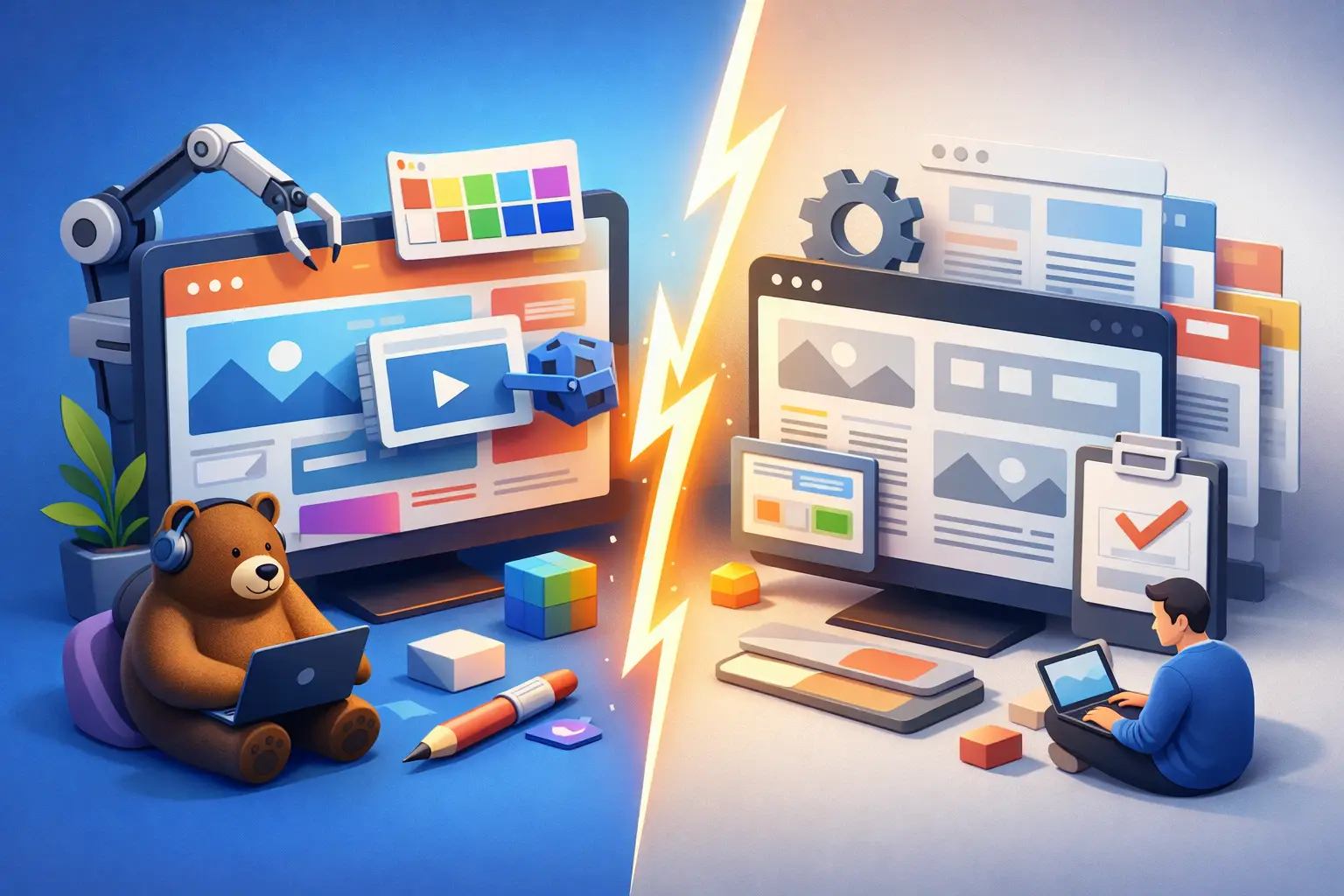
Custom Website vs Template Website Compared
Compare a custom website vs template website to choose the right path for speed, brand control, lead generation, and long-term growth for your business.
A website that looks acceptable but fails to generate calls, quote requests, demos, or purchases is not a business asset. It is a digital brochure collecting dust. The custom website vs template website decision matters because it affects how quickly you launch, how clearly you stand apart, and how effectively your site supports revenue.
For small and mid-sized businesses, the answer is rarely about picking the most expensive option. It is about choosing the right platform and level of investment for where your company is headed. A template can get a new business online fast. A custom website can give an established company the performance, flexibility, and market position needed to compete harder.
What a Template Website Is Built to Do
A template website starts with a pre-designed structure. You select a theme, replace the demo copy and images, adjust colors and fonts, then publish. Platforms such as WordPress, Shopify, Wix, Squarespace, and Framer all offer template-driven paths to launch.
Its biggest advantage is speed. If your business needs a clean online presence quickly, a well-chosen template can create a credible starting point without the cost of designing every interface, component, and user journey from scratch. It can work especially well for a new service business, a simple local offering, an event site, or a company validating an idea.
Templates also make the early decisions easier. Navigation, page layouts, mobile behavior, and basic calls to action are already in place. For a business with limited content and a clear offer, that structure can prevent a stalled website project.
The limitation is that the same structure that saves time can limit growth. Many templates are built to serve thousands of different businesses. They are not built around your sales process, your customers' objections, your services, or the actions that create qualified leads for your team.
Where Template Sites Start Holding Businesses Back
A template is not automatically a weak website. Poor messaging, weak offers, generic photography, and confusing navigation can hurt a custom build just as easily. But template sites often introduce constraints at the point where businesses need to scale.
First, brand differentiation becomes harder. Your colors and logo may be unique, but visitors still recognize familiar layouts, stock sections, and predictable page flows. When every competitor uses similar pages, your company has fewer opportunities to make a strong first impression.
Second, customization can become expensive in the wrong way. A business may choose a template to save money, then spend months patching it with plugins, custom code, workarounds, and third-party tools. That can create a site that is harder to maintain than a purpose-built solution.
Third, templates may not match your conversion path. A commercial contractor may need project galleries, service-area targeting, bid-request workflows, and CRM routing. A B2B technology company may need gated resources, segmented landing pages, account-based campaigns, and integrations with sales automation. Trying to force these needs into a generic theme can produce friction for both visitors and internal teams.
Performance is another consideration. Many prebuilt themes include features you will never use, which can add unnecessary code and slow page loads. Speed alone will not save a poor website, but a fast, focused site makes it easier for visitors to act and gives marketing campaigns a stronger destination.
Custom Website vs Template Website: The Real Difference
A custom website is designed and developed around business goals rather than around a fixed set of theme options. It begins with questions a template cannot answer for you: Who is the ideal customer? What information do they need before contacting you? What differentiates your offer? Which conversion actions matter most? How should the website connect to the rest of your technology stack?
The result does not have to mean reinventing every element of the internet. Smart custom development uses proven patterns where they work and invests design effort where your business needs an advantage. That may mean a clearer service selector, a lead qualification form, a location-based content strategy, a product configurator, an interactive case study, or a dashboard that makes complex information easier to understand.
Custom also gives your team more control over the future. Modern development frameworks such as Next.js can support fast, scalable web experiences. A flexible content system such as Payload can make it easier for teams to manage pages, resources, and campaign content without turning every site update into a development request. The goal is not technology for technology's sake. The goal is a website that can move at the speed of your business.
That flexibility comes with a higher upfront investment. Discovery, strategy, design, development, quality assurance, content planning, and integrations take time. A custom site is the stronger choice when the website is expected to generate leads, support sales, reduce manual work, or become a central part of your growth engine.
Choose a Template When Speed Matters More Than Complexity
A template website may be the right move if you are launching a new company, testing demand, working with a limited budget, or only need a small number of pages. It can also be a practical choice for businesses that need a temporary site while a larger digital strategy is being planned.
The key is to treat the template as a deliberate starting point, not a permanent answer. Invest in strong positioning, clear copy, real photography where possible, and calls to action that tell visitors what to do next. A polished template with focused messaging will outperform a visually impressive site that says nothing meaningful.
Before selecting one, confirm that it supports the essentials: mobile responsiveness, basic search engine optimization controls, fast loading, accessible navigation, secure forms, analytics, and the integrations your business relies on. The cheapest option is not a bargain if it blocks your next marketing campaign or makes lead tracking unreliable.
Invest in Custom When Your Website Must Perform
A custom website is usually worth it when your company has outgrown a basic brochure site. If paid advertising, search visibility, referrals, or outbound sales are bringing meaningful traffic to your website, the site needs to do more than look professional. It needs to convert attention into measurable opportunities.
Custom development makes sense when you have complex services, multiple audience segments, several locations, a detailed sales process, or an offer that requires education before a prospect is ready to contact you. It is also the better route when your brand competes in a crowded market and needs to communicate authority quickly.
Look beyond design when evaluating the return. A well-built custom site can improve lead quality by asking smarter questions, shorten response times through automation, give sales teams better context, and create landing pages that align with specific campaigns. Those gains can matter far more than the visual differences between one homepage and another.
For example, an HVAC company running local ads may need separate service pages, emergency request routing, financing information, and location-specific proof. A manufacturing firm may need technical specifications, distributor workflows, downloadable resources, and CRM integration. Both can use templates at first, but their long-term requirements point toward a custom solution.
Avoid the False Choice: Start With Strategy
The strongest decision is not simply custom or template. It is strategy first, then the right execution level. A template can be configured thoughtfully and supported by strong advertising, content, and conversion tracking. A custom website can fail if it is built around internal preferences instead of customer behavior.
Start by defining the job your site must do over the next 12 to 24 months. Is it primarily establishing credibility? Generating local leads? Supporting a sales team? Selling online? Reducing operational work through automation? Your answer determines the pages, integrations, content system, and budget that make sense.
Also consider the cost of waiting. If an outdated site is leaking qualified traffic, confusing prospects, or forcing your team to handle repetitive tasks manually, a lower upfront spend may carry a higher business cost. The right website investment should create momentum, not add another tool your team has to fight.
BearSolutions Marketing & Technology helps businesses assess the real opportunity behind their website, from focused template launches to high-performance custom builds, marketing integrations, and automation. Request a call to discuss the right setup, realistic costs, and what it will take to turn your website into a channel that helps your business dominate online.
Your next website should not be chosen because it is trendy or because it is cheap. Choose the option that gives your business a clearer path to more visibility, stronger trust, and more qualified opportunities.