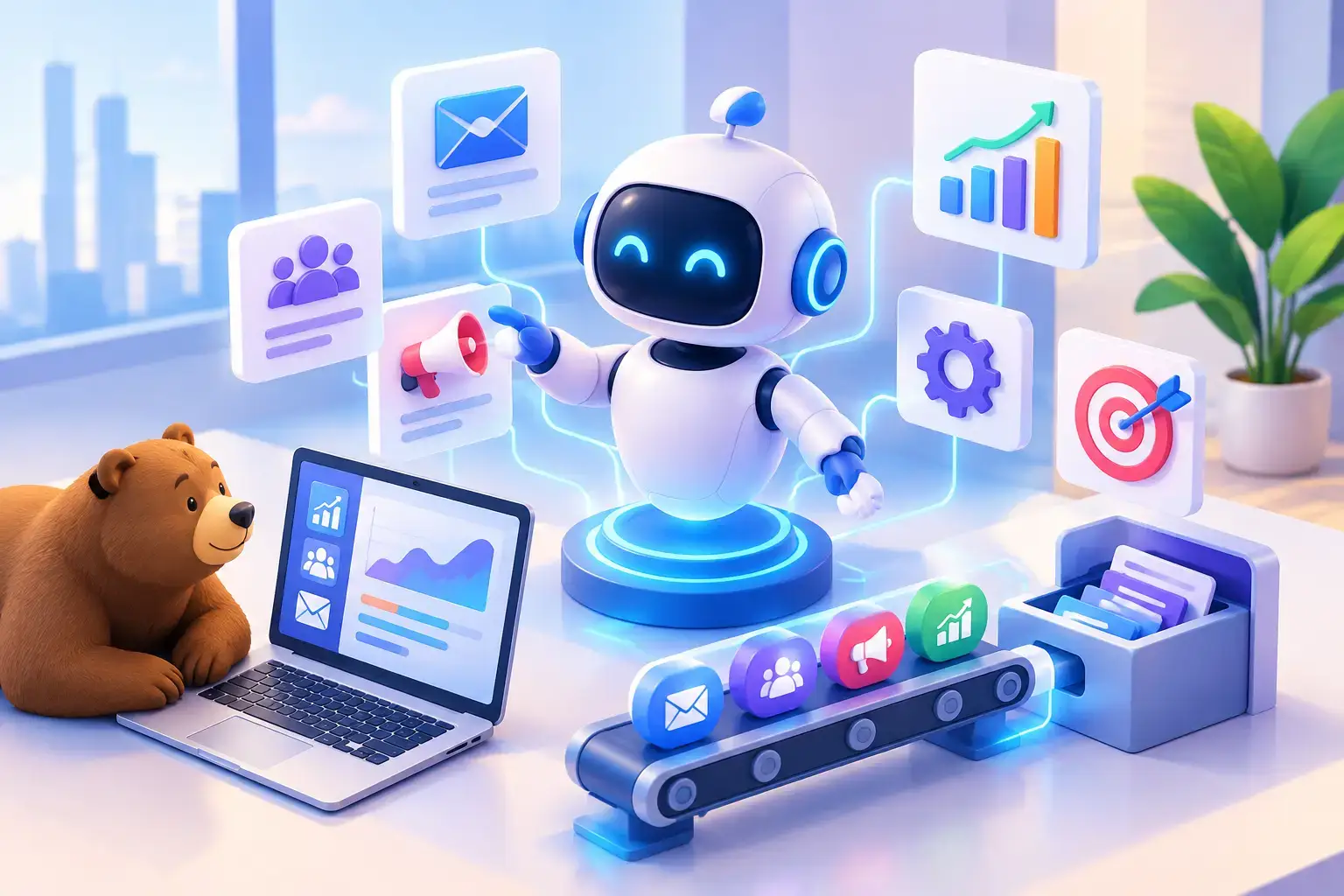
The Future of Digital Marketing Automation
The future of digital marketing automation will reward businesses that connect data, AI, and human judgment to create faster, valuable customer journeys.
A lead visits your website at 10:30 p.m., reads two service pages, downloads a guide, and leaves without calling. Tomorrow, the business that wins will not treat that activity as a cold, anonymous data point. It will recognize intent, respond with relevant follow-up, alert the right sales rep, and keep learning from the outcome. That is the future of digital marketing automation: faster action powered by better data, with human strategy still in control.
For small and mid-sized businesses, this is not about replacing people with software. It is about removing the delays, blind spots, and disconnected systems that cost opportunities every day. Marketing automation is becoming a growth infrastructure decision, not simply an email tool.
The Future of Digital Marketing Automation Is Connected
Most businesses already use some automation. A form sends an email. A customer receives a reminder. An ad platform retargets a site visitor. These are useful starting points, but isolated automations create isolated customer experiences.
The next phase connects the website, CRM, advertising data, email platform, customer service activity, and analytics into one operating system. When those signals work together, a business can see more clearly where prospects come from, what they need, and what action is most likely to move them forward.
Consider a commercial contractor. A visitor arriving from a paid search ad for emergency repairs should not receive the same generic follow-up as someone researching a long-term maintenance agreement. The topic they searched, the pages they viewed, their company size, and how quickly they returned to the site all add context. Connected automation helps turn that context into a relevant response.
That distinction matters because buyers expect businesses to remember the conversation. They do not care whether a website, an ad platform, and a sales team use different systems behind the scenes. They judge the experience as one brand.
AI Will Improve Decisions, Not Eliminate Accountability
Artificial intelligence is changing what automation can do. Instead of following only fixed if-then rules, AI can help classify leads, summarize calls, identify content gaps, predict likely conversion paths, and recommend the next best action.
For a growing business, that can mean less time spent sorting spreadsheets and more time spent acting on high-value opportunities. AI can flag a lead who is showing strong purchase intent. It can identify which campaign produces qualified conversations rather than cheap clicks. It can help a marketing team create variations of messages for different audience segments without starting from a blank page every time.
But AI is not a substitute for positioning, judgment, or accountability. If the offer is weak, the website is confusing, or the CRM contains incomplete data, automation will scale the problem just as efficiently as it scales a good process.
The strongest approach is human-led and AI-assisted. People set the business goals, define the customer experience, approve brand messaging, and monitor results. Technology handles the repetitive work and surfaces signals that would otherwise be missed.
Websites Will Become Active Growth Systems
An outdated website is often the biggest obstacle to effective automation. If a site loads slowly, lacks clear conversion paths, or fails to capture useful information, there is little for an automation platform to work with.
The modern website is becoming an active part of the marketing operation. It can personalize calls to action based on campaign source, route form submissions by service area or urgency, connect visitors to the right resource, and feed engagement data back into the CRM. It should support the sales process rather than function as a digital brochure.
This does not mean every website needs complicated personalization on day one. Overengineering creates expense and maintenance problems. The right level of automation depends on sales cycle length, lead volume, buying complexity, and the value of each customer.
A local service company may benefit most from fast response workflows, appointment reminders, review requests, and lead-source reporting. A B2B firm with a longer sales cycle may need lead scoring, educational email sequences, account-level tracking, and handoffs between marketing and sales. The technology should fit the revenue model, not the other way around.
First-Party Data Will Become More Valuable
As privacy rules tighten and third-party tracking becomes less dependable, businesses will rely more heavily on data collected through their own channels. Website forms, newsletter subscriptions, customer inquiries, purchase history, chat conversations, and CRM activity will carry more value.
That creates a clear priority: give people a real reason to share their information. A useful estimate tool, practical guide, consultation, product comparison, or service-specific resource can earn attention better than a vague request to join a mailing list.
Once a prospect opts in, the responsibility is to use that data respectfully. Automation should make communication more helpful, not more intrusive. Frequency limits, preference centers, clean contact records, and clear consent practices protect both brand trust and campaign performance.
Speed to Lead Will Be a Competitive Advantage
Many businesses lose leads for a simple reason: nobody follows up quickly enough. An inquiry sits in an inbox, gets forwarded to the wrong person, or receives a delayed generic reply after the prospect has contacted three competitors.
Automation closes that gap. The moment a qualified lead submits a form, the system can confirm receipt, send relevant information, create a CRM record, notify the appropriate team member, and trigger a task for personal outreach. That is not impersonal. It creates room for a faster, more prepared human conversation.
The key is to avoid confusing speed with pressure. A homeowner requesting a quote may need reassurance and a clear next step. A procurement manager may need specifications, case examples, and an easy path to schedule a technical discussion. Effective automation adjusts to the decision being made.
Measurement Will Move Beyond Surface-Level Metrics
Open rates, clicks, impressions, and form fills are useful signals, but they do not always tell a business whether marketing is producing revenue. The future belongs to companies that connect activity to business outcomes.
That means tracking which channels generate qualified leads, booked meetings, proposals, closed deals, repeat customers, and lifetime value. It also means identifying where the handoff breaks down. If an ad campaign generates leads but the sales team cannot reach them, the campaign may not be the real problem. If a high-performing landing page attracts the wrong audience, more traffic will only increase waste.
Automation makes this level of visibility more achievable, but only if the data is organized. Consistent lead stages, campaign naming, source tracking, and CRM discipline are not glamorous work. They are the foundation for decisions that protect budget and accelerate growth.
What Businesses Should Build Now
The right starting point is not buying the most expensive platform. Start by mapping the customer journey from first visit to closed sale. Identify where prospects wait, where your team repeats manual tasks, and where valuable information disappears between systems.
Then prioritize the automations with direct business impact. For many companies, that includes immediate lead response, CRM routing, abandoned inquiry follow-up, appointment reminders, sales alerts, post-purchase communication, and reporting that connects marketing spend to revenue.
Build in stages. Launch one workflow, test it against real customer behavior, fix the gaps, and expand from there. A smaller system that your team actually uses will outperform a complicated stack that nobody trusts.
BearSolutions Marketing & Technology helps businesses connect web development, AI, advertising, data, and automation into a growth system built for action. If you want to know what automation setup fits your operation, what it should cost, or where your biggest opportunities are being lost, request a call and get a practical plan for moving forward.
The businesses that dominate online will not be the ones that automate the most. They will be the ones that use automation to respond faster, understand customers better, and make every digital interaction earn the next conversation.